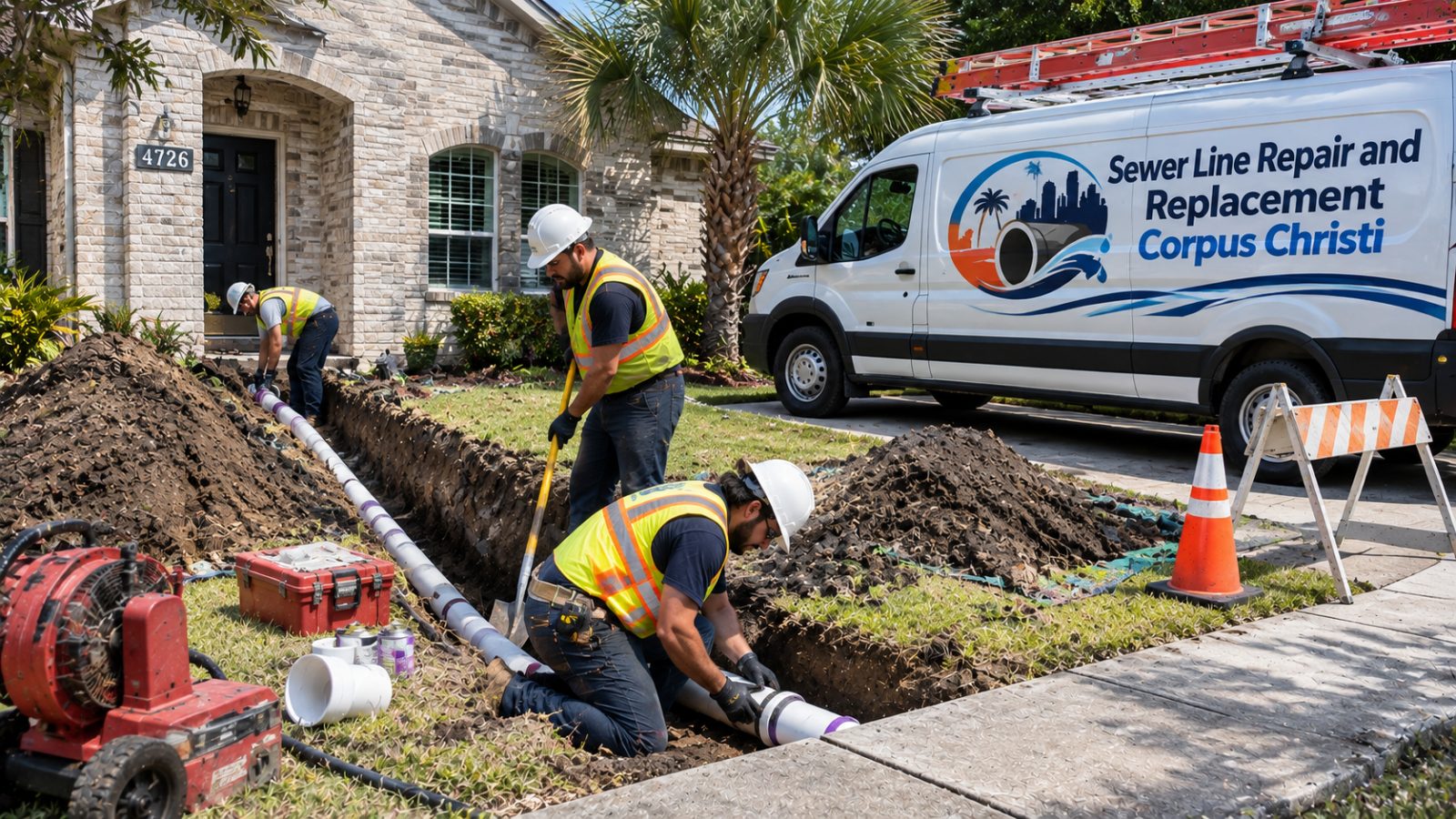
Underground Sewer Pipe Solutions
Sewer Line Repair in Corpus Christi, TX
Find out what is causing your sewer line trouble. Get a Free Estimate
Underground Sewer Pipe Solutions
Find out what is causing your sewer line trouble. Get a Free Estimate
Sewer lines carry wastewater away from your home or business. When a pipe cracks, separates, develops an obstruction, or loses its proper alignment, wastewater may stop flowing as intended. The warning signs often appear inside the building first, with slow drains, gurgling fixtures, repeated toilet backups, or unpleasant sewer odors.
Our sewer line repair approach starts with understanding the symptoms and identifying the affected section. A damaged pipe does not always require a complete system replacement. When the surrounding line remains in suitable condition, a focused repair may correct the defect while limiting unnecessary work.
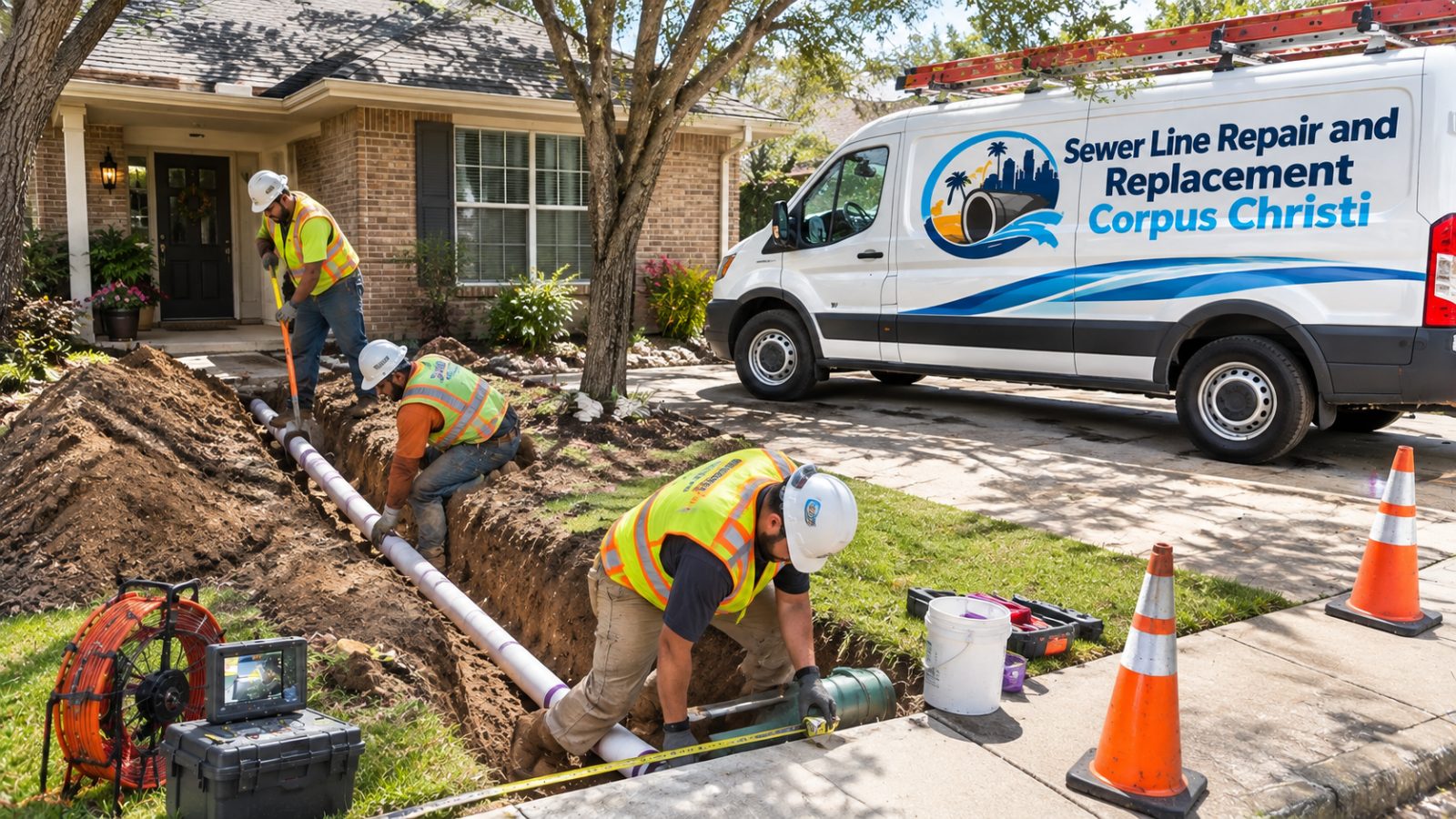
Underground sewer pipes can fail for several reasons. The type of damage, pipe material, depth, and accessibility all influence which repair method makes sense.
Cracks can develop as pipes age, settle, or experience external pressure. A small opening may allow water to escape or soil to enter, while a larger break can interrupt wastewater flow entirely. We focus on locating the damaged section and evaluating whether a targeted repair is practical. The repair method depends on the pipe material and surrounding conditions. Some defects require excavation and replacement of a short section, while certain pipes may qualify for a trenchless approach.
Roots naturally seek moisture and may enter sewer lines through joints, cracks, or other openings. Once inside, they can catch debris and gradually restrict flow. Cutting roots out of a line may restore drainage temporarily, but an existing pipe opening can allow the problem to return. We consider both the obstruction and the condition of the pipe itself. A lasting solution may involve repairing the entry point or replacing a damaged section.
Underground movement can cause pipe connections to shift apart. These gaps may allow soil to enter the line, create places where waste collects, or interfere with normal drainage. Joint separation can occur in different pipe materials and may be associated with settlement or ground movement. A camera inspection can help identify the location and apparent severity of the separation. Repair recommendations depend on whether the surrounding pipe remains structurally sound.
A sewer belly occurs when a section of pipe settles and forms a low spot. Wastewater may collect in that area instead of flowing consistently toward the connection point. Over time, solids can accumulate and contribute to recurring backups. A significant belly may require excavation and correction of the pipe slope. The surrounding soil and bedding conditions should also be considered so the repaired section has proper support.
When multiple fixtures back up or a blockage returns shortly after cleaning, the cause may be inside the main sewer line. Roots, grease accumulation, broken pipe sections, and poor pipe alignment can create recurring restrictions. Rather than assuming the same cleaning method will solve the problem indefinitely, we look at whether a structural defect is contributing to the repeated obstruction.
| Service | Estimated Cost | Average |
|---|
No pricing is published. Repair scope depends on the pipe condition, damage location, depth, access, and selected method. A property-specific assessment is needed.
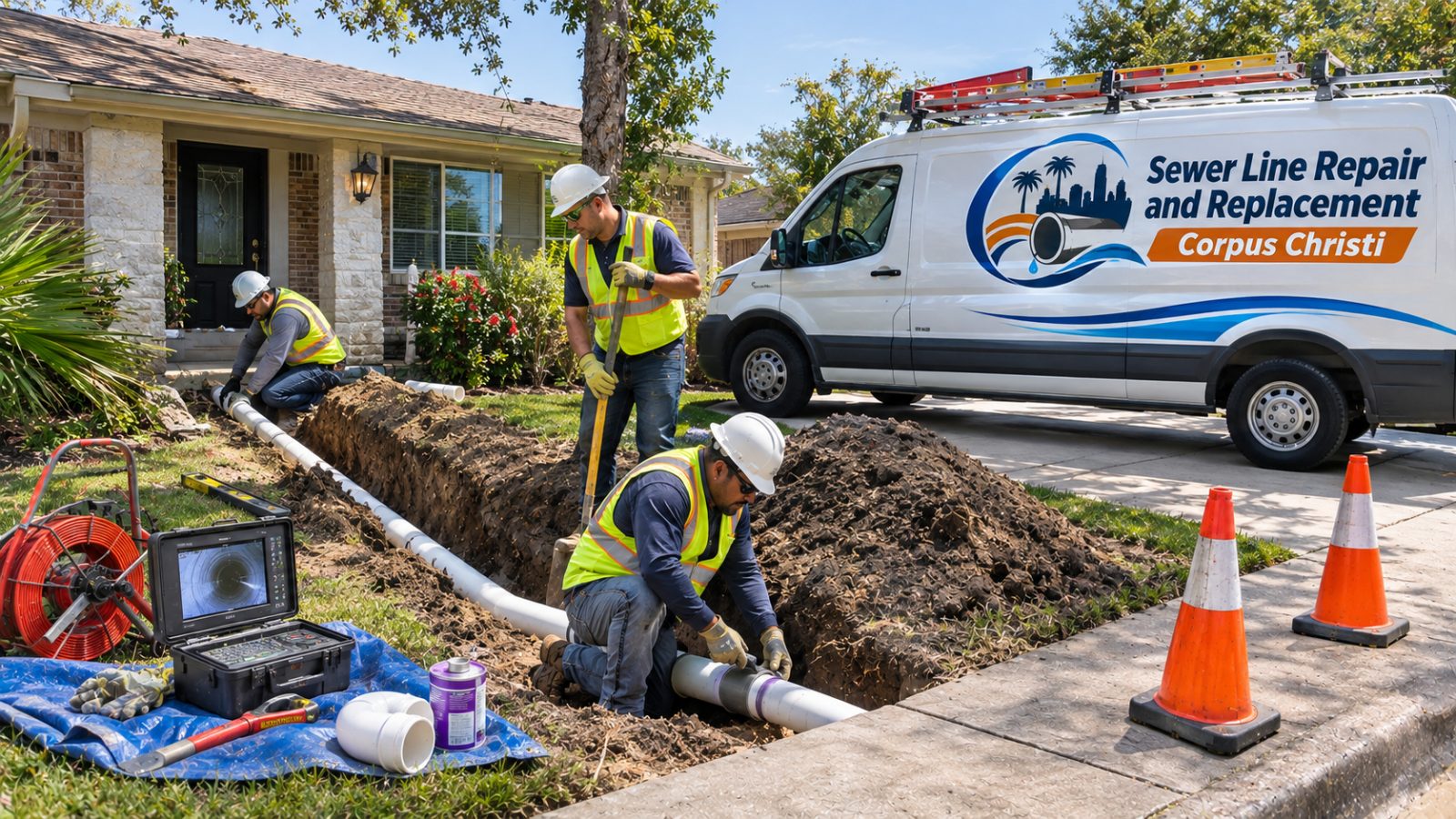
We aim to identify the damaged area instead of treating every sewer backup as a complete line failure.
We consider pipe condition, access, and the likely durability of each repair method.
We explain why a section may need repair and what the work could involve.
Recurring backups or signs of a damaged sewer pipe? Request an assessment of your sewer line.
Free — no obligations
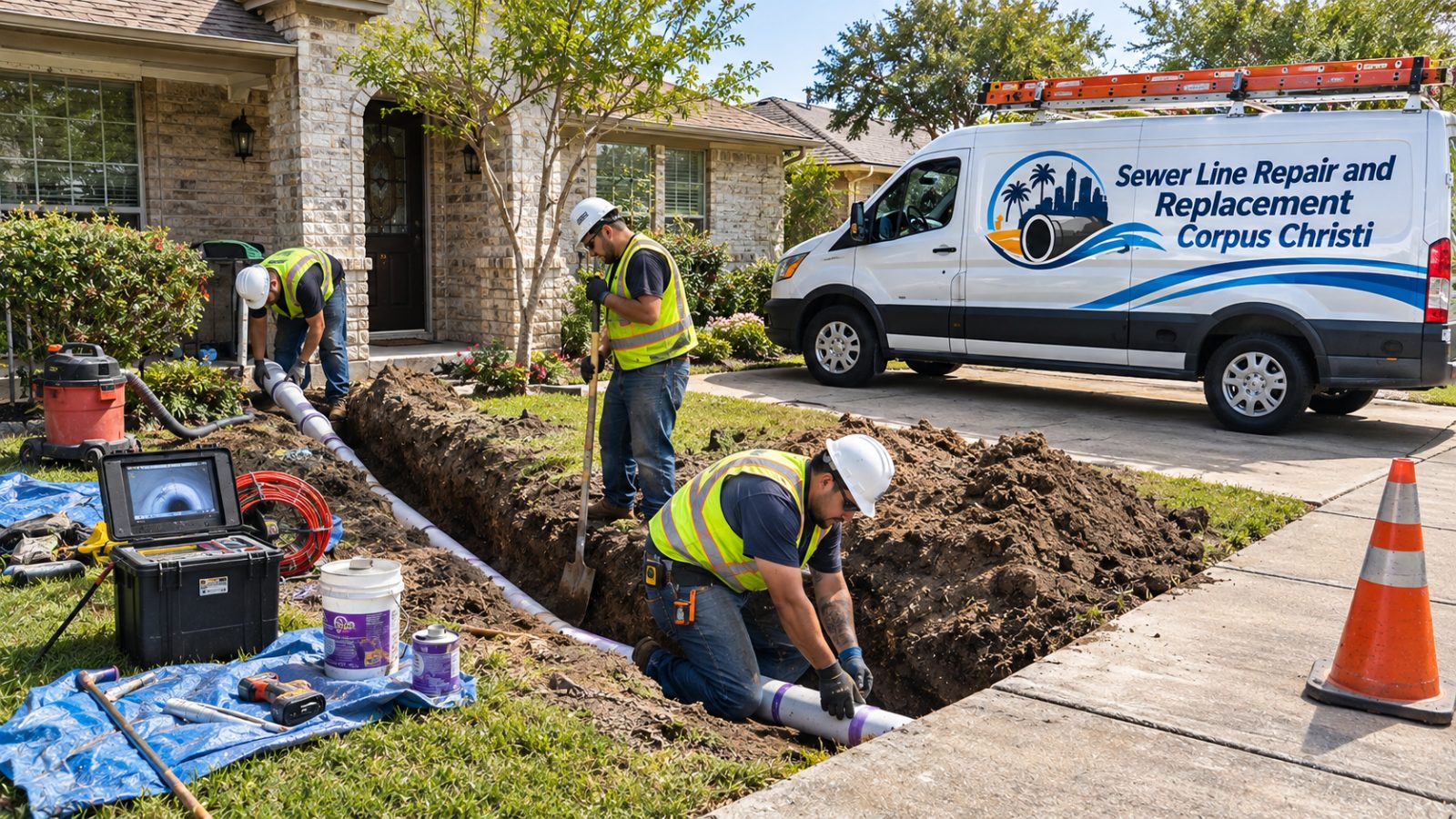
We start with the backup history, affected fixtures, visible warning signs, and property conditions.
Appropriate inspection methods help locate the restriction or structural problem.
We discuss targeted excavation, pipe replacement, or trenchless possibilities where suitable.
The selected repair method addresses the affected pipe section and restores the intended wastewater path.
The repaired line is evaluated using appropriate methods before the work is considered complete.